
Position on Board: Secretary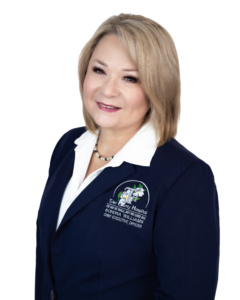
Counties represented: Tyler and Newton
Sondra Williams’s healthcare career began as a Licensed Vocational Nurse (LVN). Before entering nursing, she earned a degree in interior design, but ultimately found her calling in healthcare. She began nursing school through Tyler County Hospital and continued her education throughout her career, eventually earning a Master of Science in Nursing from the University of Texas.
She has spent 27 years with Tyler County Hospital District, serving in a variety of roles before becoming Chief Executive Officer in 2018. Much of her career has been spent in emergency services, where she witnessed firsthand the significant need for mental health care in rural communities.
How did you first get involved with Burke?
My first involvement with Burke came through caring for patients at the bedside. As an emergency department nurse, I regularly worked with individuals experiencing mental health crises.
I later served as a hospital representative on the original Rural East Texas Health Network (RETHN) committee while plans for the Mental Health Emergency Center (MHEC) were being developed. I remember visiting the property and discussing what mental health services our region needed. We knew MHEC would be an important first step in improving access to care.
What was your first impression of Burke?
My first impression was that there simply were not enough mental health services available for patients in acute distress. Before MHEC existed, patients experiencing a mental health crisis often remained in local emergency rooms for extended periods while waiting for placement elsewhere.
Over the years, I have seen tremendous improvement. Today, there are more resources available, mental health professionals are involved earlier in the process, and patients have greater access to evaluation, treatment, and follow-up care. Serving on the Burke Board has given me a deeper understanding of the challenges involved in delivering effective mental health services and the progress that has been made.
What do you wish other people knew about Burke?
Many people are familiar with Burke for crisis and emergency services, but I wish more people understood the full range of services it provides.
The prevention, early intervention, and ongoing support services are just as important as crisis care. Those services help individuals remain stable, avoid emergencies, and live healthier, more independent lives. That long-term support is often invisible to the public, but it makes a tremendous difference.
What do you think will change about Burke (or the MH/IDD service realm) over the next five years?
I would like to see greater recognition of the need for mental health and intellectual and developmental disability (IDD) services, along with the funding necessary to meet those needs.
There is still a great deal of public education needed, particularly around IDD services. Many people do not fully understand the scope of care required or the impact these services have on individuals and families. I hope future legislation will continue to support expanded access and resources for those who need them.
How would someone describe you?
People would probably describe me as passionate—sometimes perhaps a little too passionate. I am deeply committed to protecting patients’ rights and ensuring people receive the care they need.
What do you do when you aren’t volunteering?
Outside of my role as CEO of Tyler County Hospital District and Burke Board Secretary, I am active in my church and serve on the board of DETCOG. Much of my life has been dedicated to my family, my community, and healthcare.
No matter what role I hold, patient care remains at the center of what I do. I believe public resources should directly benefit the people they are intended to serve, and I am passionate about ensuring that healthcare services make a meaningful difference in the lives of patients and families.